
AR

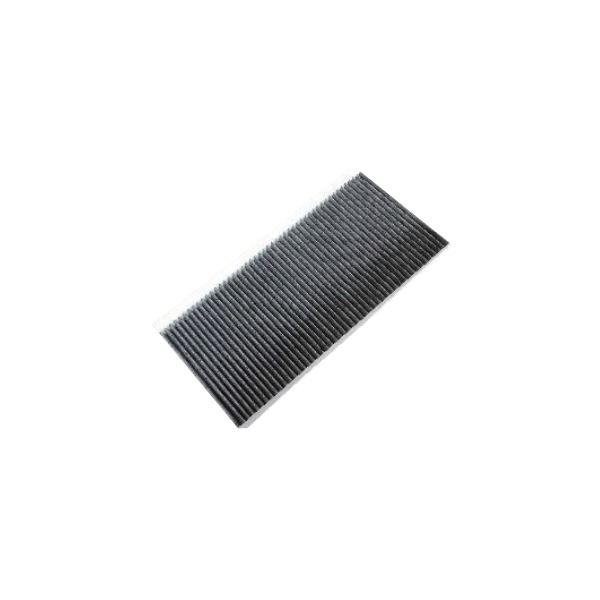
The Thesvin automotive cabin air filter is a dual-layer replacement filter that combines high-efficiency HEPA media with high-iodine coconut shell activated carbon. It captures PM2.5 particles, dust, and pollen while adsorbing ammonia, sulphides, and exhaust VOCs from the air entering the vehicle cabin. It is designed for passenger cars, SUVs, MPVs, buses, heavy trucks, and construction machinery, and is available as a custom-fit part for original equipment and aftermarket programmes.
Fitment starts with the filter frame and its relationship to the host HVAC housing. Thesvin produces this cabin filter in any length, width, thickness, and pleat count to match the air duct requirements of a specific vehicle model. Because the filter is a direct replacement for the original cabin element, the outer dimensions and pleat geometry are the primary interface points: the element must locate squarely in the housing, seal along its perimeter, and present the correct face area to the incoming airflow.
For OEM and ODM programmes, Thesvin works from the vehicle model, a dimensioned drawing, or an original part sample. The frame is produced to the drawing so that the filter seats without modification to the housing. Pleat count and pleat height are set together with the overall thickness, which allows the filter to fit the available depth while providing the media area needed for low airflow resistance.
Because the same filter platform is supplied across passenger cars, commercial buses, heavy trucks, and construction machinery, the fitment process is kept consistent: confirm the housing dimensions, confirm the sealing face, confirm the airflow direction, then produce the frame and pleat pack to match. This approach reduces trial-and-error when a single part number must serve several vehicle variants.
The filter media is a dual-effect composite: a high-precision HEPA layer for particle capture and a high-iodine coconut shell granular activated carbon layer for odour and gas adsorption. The HEPA layer is specified for PM2.5 particles and dust, while the carbon layer targets ammonia, sulphides, and exhaust VOCs that enter the cabin through the HVAC intake. This combination addresses both particulate matter and nuisance odours in a single element.
The antibacterial function is built into the filter construction. The filter is designed to inhibit the growth of common bacteria such as E. coli and Staphylococcus aureus, with an antibacterial rate that can reach 99% or more according to the product test data. The same construction also captures pollen and other airborne particles. For buyers who need documented performance, Thesvin's CNAS-accredited laboratory can issue test reports covering filtration efficiency, antibacterial rate, resistance, and dust holding capacity.
Airflow characteristics are a deliberate part of the design. The pleated construction keeps operating resistance low, which helps maintain HVAC blower performance and cabin comfort. Low resistance also supports a high dust holding capacity, so the filter can carry more contaminants before airflow drops or replacement is due. In practical terms, the filter is intended to protect the cabin air quality without adding noticeable load to the climate control system.
| Item | Detail |
|---|---|
| Product name | Automotive Cabin Air Filter / Car Air Filter Element |
| Core construction | Dual-effect composite: high-precision HEPA filter media + high-iodine coconut shell granular activated carbon |
| Filtration performance | High-efficiency interception of PM2.5 particles and dust; targeted adsorption of ammonia, sulphides, and exhaust VOCs |
| Airflow characteristics | Good airflow, low operating resistance, high dust holding capacity, and long service life |
| Main applications | Passenger cars (sedan/SUV/MPV, etc.), commercial buses, heavy trucks, and construction machinery HVAC systems |
| Custom dimensions | 100% OEM/ODM customisation for all vehicle models; any length, width, thickness, and pleat count can be produced to the original vehicle air duct requirements |
| Quality system | 50,000 m² factory; IATF 16949 automotive quality management system; CNAS-accredited laboratory for automotive-grade release testing |
Thesvin holds IATF 16949 certification for automotive quality management, obtained in 2024, and also operates under ISO 9001, ISO 14001, and ISO 45001. Dimensional consistency is controlled through incoming inspection (IQC), in-process inspection (IPQC), and outgoing inspection (OQC), so that each batch matches the approved drawing. The company's own laboratory is CNAS-accredited and can issue reports for filtration efficiency, dust holding capacity, resistance, and antibacterial performance.
Production takes place in a 50,000 m² facility that includes six clean workshops totalling 20,000 m², which supports stable output for original equipment and aftermarket orders. Multiple automated production lines give a monthly capacity of several million pieces. Products comply with REACH and RoHS, and compliance documents can be supplied for export markets. Thesvin has more than 20 years of filtration product development and manufacturing experience, has developed over 1,000 filtration solutions, and has exported to Europe, the United States, Japan, and South Korea for more than 20 years.
To receive a quotation or a fitment recommendation, send the vehicle or device model, the filter dimensions or a drawing, the required airflow or application conditions, and the quantity you plan to order. If a drawing is not available, an old part or a photo with measurements is enough to start. Thesvin will confirm the frame size, pleat count, and media grade, then provide a sample and quotation. Contact us to begin.
Thesvin produces this cabin filter in any length, width, thickness, and pleat count to match the original vehicle air duct, so fitment is based on the housing dimensions rather than a fixed size. Send the vehicle model, year, and housing measurements or a drawing, and the frame will be produced to that interface. An original part sample can also be used as the reference.
Yes. An old filter or a photo with measurements is sufficient to start the fitment review. Thesvin will measure the interface points and produce a sample that matches the housing. A dimensioned drawing is helpful but not mandatory.
The filter uses a HEPA layer for PM2.5 particles and dust, plus a high-iodine coconut shell activated carbon layer for ammonia, sulphides, and exhaust VOCs. The antibacterial construction is designed to inhibit common bacteria such as E. coli and Staphylococcus aureus, with an antibacterial rate that can reach 99% or more according to product test data. CNAS laboratory reports covering efficiency, resistance, and dust holding capacity are available.
Yes. Thesvin supports full OEM/ODM customisation: dimensions, pleat count, media grade, frame construction, logo, and packaging can all be specified. The company has developed more than 1,000 filtration solutions and can adapt the cabin filter to passenger cars, buses, heavy trucks, and construction machinery.
After receiving the vehicle model, dimensions or drawing, airflow or application conditions, and quantity, Thesvin confirms the specification and provides a quotation. Custom samples are typically available in 7–15 working days, and stock samples in 3–5 working days, with CNAS test reports covering efficiency, antibacterial rate, resistance, and dust holding capacity.
The MOQ is typically 500–1,000 pieces for standard models. Custom models are quoted separately and are generally 2,000–5,000 pieces depending on tooling and material requirements. Monthly capacity of several million pieces supports large programmes.
Standard products are delivered in 15–25 days. Custom products, including tooling development, take about 30–45 days for development and 25–35 days for mass production. The 50,000 m² facility and automated lines support stable scheduling for repeat orders.
Under normal use, Thesvin recommends replacement every 15,000–20,000 km or once a year. In heavily polluted or dusty areas, shorten the interval to 10,000 km. The filter's dust holding capacity and antibacterial durability are verified in the CNAS laboratory, and life test data can be provided for reference. Contact us with your application details to confirm the right interval for your programme.