
DE-DE

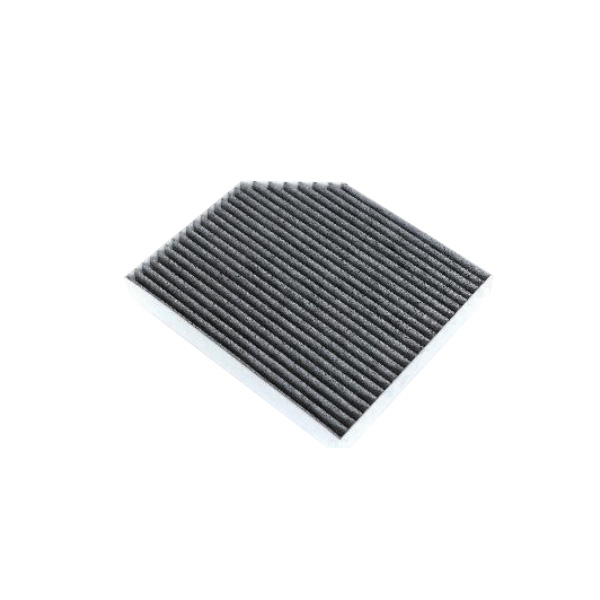
Thesvin Automotive Cabin Air Filter is a dual-layer cabin filter that combines high-precision HEPA media with high-iodine coconut-shell granular activated carbon. It traps PM2.5 particles and dust while adsorbing ammonia, sulphides and exhaust VOCs from the air entering the passenger compartment. It is built for passenger cars, coaches, heavy trucks and construction machinery, and for OEM/ODM buyers who need the frame, thickness and pleat count matched to a specific HVAC air duct.
Fitment is the first thing we confirm on this filter, because a cabin filter that is 2 mm out in length or too thick at the pleat pack will not seat in the housing. The Thesvin cabin filter is made to the host vehicle's air duct requirement: length, width, thickness and pleat count are all open to customisation under a full-vehicle OEM/ODM programme. That means the cartridge outline follows the tray it slides into, the pleat pack sits at the depth the blower housing expects, and the filter does not foul the recirculation flap or the blower intake.
The construction is a two-effect composite: a high-precision HEPA filtration layer bonded to a high-iodine coconut-shell granular activated carbon layer. Both layers are held in one pleated pack, so the installer handles one part rather than two stacked elements. Because the pleat geometry is defined during tooling, the pack keeps its shape in the housing and the airflow face stays open across the full panel.
Dimensions are not the only fitment question. Airflow resistance is part of the interface too: a filter with a low operating resistance lets the HVAC blower deliver its designed air volume without the cabin fan having to run harder. The pleated structure here is specified for low resistance with a high dust-holding capacity, so the filter keeps its airflow characteristic across its service life rather than loading up and choking the duct. For OEM buyers, we match the part to your existing housing drawing rather than asking you to modify the vehicle side.
Air drawn into the cabin passes through the HEPA layer first, which intercepts PM2.5 particulate and dust, together with the pollen and fine airborne matter that travel with them. The air then crosses the high-iodine coconut-shell activated carbon, which targets ammonia, sulphides and the VOCs associated with vehicle exhaust. The result is a single filter that addresses both the particulate load and the odour load in the ventilation stream.
This makes the part relevant to passenger cars (sedans, SUVs, MPVs), commercial coaches, heavy trucks and construction machinery, where the cabin air intake sits close to traffic, diesel exhaust or worksite dust. The activated carbon is granular coconut-shell material with a high iodine value, chosen for adsorption capacity rather than for a thin carbon coating. Dust-holding capacity is high, so the filter carries a large particulate load before resistance rises.
| Item | Detail |
|---|---|
| Product name | Automotive cabin air filter / automotive air filter (dust removal) |
| Core structure | Dual-effect composite: high-precision HEPA filtration media + high-iodine coconut-shell granular activated carbon |
| Core filtration performance | High-efficiency interception of PM2.5 particulate and dust; targeted adsorption of ammonia, sulphides and exhaust VOCs |
| Physical and airflow characteristics | Good airflow behaviour, low operating resistance, high dust-holding capacity and long service life |
| Main applications | Air-conditioning ventilation systems of passenger cars (sedans, SUVs, MPVs), commercial coaches, heavy trucks and construction machinery |
| Size customisation | Full-vehicle OEM/ODM customisation supported: any length, width, thickness and pleat count to suit the original vehicle's air duct requirement |
| Quality and certification | 50,000 m² plant; IATF 16949 automotive quality management system; factory-level quality assured by a national CNAS testing centre |
Dimensional consistency is controlled at three points: incoming inspection (IQC) on raw media and carbon, in-process inspection (IPQC) during pleating and assembly, and outgoing inspection (OQC) before packing. The company has held IATF 16949 automotive quality management system certification since 2024, and also holds ISO 9001, ISO 14001 and ISO 45001 certification. Products meet REACH and RoHS environmental requirements, and compliance documentation can be supplied with shipments.
The self-built laboratory is CNAS-accredited and issues test reports covering filtration efficiency, dust-holding capacity and resistance. The production base covers 50,000 m², including six clean workshops totalling 20,000 m², with multiple automated lines and monthly capacity in the millions of pieces. Standard items ship in 15–25 days and custom items in 30–45 days including tooling. Thesvin has more than 20 years of filtration R&D and manufacturing experience and has exported to Europe, the United States, Japan and Korea for over 20 years, with more than 1,000 filtration solutions developed to date. The company is located in Zhongshan, Guangdong, China.
To get a quotation, send us the device or vehicle model, the size or a drawing (or the old part itself), the airflow or water flow the filter must handle, the operating conditions, and the quantity you plan to order. With those five inputs we can confirm fitment and return a specification and price. Start here: contact our team.
Fitment is matched to the host vehicle's air duct: length, width, thickness and pleat count are all customisable under our full-vehicle OEM/ODM programme. Send the vehicle model, OEM part number or a drawing and we will confirm the dimensions against your housing before quoting.
The HEPA layer intercepts PM2.5 particulate and dust, and the coconut-shell activated carbon targets ammonia, sulphides and exhaust VOCs. Efficiency is verified in our CNAS-accredited laboratory, which issues reports covering filtration efficiency, dust-holding capacity and resistance.
Yes. A physical sample of the old filter is a practical substitute for a drawing, because it carries the length, width, thickness and pleat count we need. Our engineering team can develop a custom sample in 7–10 working days from that input.
We support OEM/ODM on dimensions and structure, media grade (standard dust removal, PM2.5 high-efficiency, activated carbon composite or HEPA), frame material, logo printing and retail packaging. More than 1,000 filtration solutions have been developed for customers worldwide.
Standard sizes typically start at 1,000–2,000 pieces, while custom items generally start at 5,000 pieces depending on tooling. Free samples are available for stock standard items with freight paid by the customer; custom samples carry a small development fee that is credited against the first order.
Standard items ship in 15–25 days and custom items in 30–45 days including tooling. Projects run from drawing to volume production in 4–6 weeks, and monthly capacity reaches millions of pieces across multiple automated lines.
Replace every 10,000–15,000 km or 6–12 months under normal use, and shorten the interval in dusty or heavily polluted areas. The high dust-holding capacity and low resistance are designed to keep airflow stable across that service life.
Send the device or vehicle model, the size or a drawing, the airflow, the operating conditions and the quantity you need. We will confirm fitment and return a specification and price — <a href="/en/contact">contact us here</a>.